
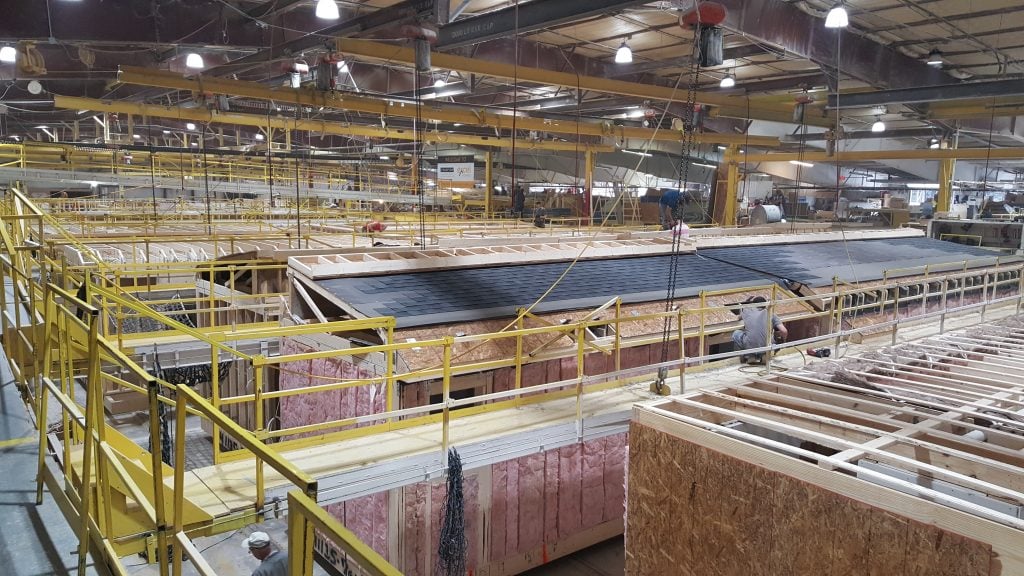
Custom homes are one-off creations. Home buyers, architects, and even traditional home builders have (incorrectly) thought that building homes using modular construction limited their design. That may have been the case 30 years ago. Today’s modern modular construction takes advantage of the innovations in engineering, structural materials, and design software to efficiently design and constructs a home in virtually any style and in any size. Modular turns home building from an inefficient site construction process into an efficient manufacturing process- introducing Constructuring.
Modular Construction and Mass Customization
U.S. housing marketing is unique in the world. Americans have a strong sense of individuality and want to express that through the homes they live in. While all homes have a floor, walls, and a roof, American home buyers expect to be able to determine what they will look like. A concept known as mass customization has been growing in the manufacturing and service industries. The aim of the mass customization concept is to gain a tremendous increase in variety and customization without a corresponding increase in costs. The modular construction industry is working diligently to apply this principle to its home manufacturing processes.
Modular is actually a design approach. It is a process that divides an object into smaller parts called modules. These modules can then be individually created and later, assembled together. A recent example is the Boeing 787 Dreamliner. Boeing believed that using the modular approach for the 787’s construction was the way to speed production, increase quality, and manage costs. After a learning period with the new process, Boeing is achieving all that it wanted from the use of the modular approach and more. Boeing has attained production rates of 12 planes per month. There were over 521 flyings as of April 2017. The 787 Dreamliner is another example of how an expensive, safety-critical, and complex product can take advantage of the modular build process.
VIDEO: WATCH THE BOEING 787 MODULAR PRODUCTION PROCESS
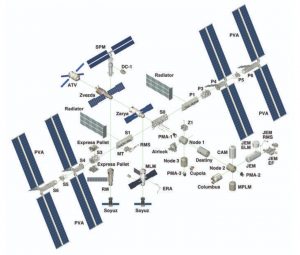 In another example, Ian Howell in his paper on constructuring, cites an example of how the international space station was built. High quality precision components that were manufactured in factories and pre-assembled as modules ready for transport that locked into place when they arrived at their final destination to create an entirely functional and sustainable “building”. There is nothing more custom than the international space station.
So, What is Constructuring?
Constructuring is a concept that combines construction with manufacturing. When you pass by a site with a home under construction you may see plumbers, electricians, framers, painters, etc. It may be raining on the day you drive by. The entire custom home building process takes place outdoors allowing the elements into the home. A 30 cubic yard dumpster sets full of waste in the front yard (waiting to be disposed of for the 2nd time). The home builder is trying to oversee the quality of building materials, as well as manage the performance of his workers and subcontractors across multiple locations from a home office.
A manufacturing process, on the other hand, is indoors. Materials and workers are dry and away from the elements. Employees (and quality) are managed. Because work is concentrated in one area (a single factory versus multiple jobsites) greater efficiencies are gained. Materials can be purchased and inventoried in bulk. Because work is scheduled, materials on hand can be reduced to exactly what is needed for current product meaning additional savings can be achieved.
Constructuring is Coming!
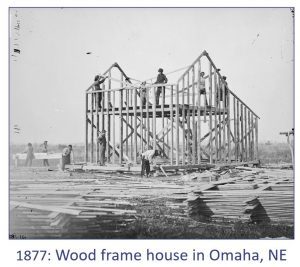 The technology is available, the design software exists, and construction productivity is at an all-time low. The stage is set. What is holding the construction industry back from adopting a new and better way? It’s the culture of construction. It’s hard to change an industry that has done it the same way for almost 200 years. Constructuring is positioned to disrupt the traditional method of home building in three critical areas: productivity, process, and people!
1. Faster Completion Time
A home’s construction time can be reduced because the site work portion in the field and the actual construction on the home’s modules are being done separately, but simultaneously.
Initial testing of many of a home’s system (plumbing and electrical) is being done prior to delivery to the site.
Weather is virtually eliminated as a delay factor because the work is being done indoors.
2. Reduced Costs
Labor costs are reduced because of lost productivity due to weather.
Much of the rework is eliminated due to issues at the site.
3. Fewer Resources Used
Factory production is designed to minimize, reused, or eliminate waste
Less wasted work time because of the concentration of many homes being constructed in one location versus spreading resources across scattered lots for typical custom home construction.
4. Safer for Workers
Ideal working conditions: even temperatures, no precipitation, no wind versus site condition
Level ground reduces fall and injury issues.
5. Higher Quality
Consistent processes
Continuous inspection
Trained and consistent workforce
Constructuring and Your Custom Home?
Custom home builders are busy. For home buyers, finding a quality custom home builder to build their new home is getting more and more difficult. For the custom home builder, demand is outstripping their ability to respond. Custom home builders are struggling to find skilled workers and craftsmen to deliver the quality that home buyers expect and deserve. Because of the lack of skilled construction workers, the construction industry as a whole continues to be one of the only industries that continues productivity actually go down year over year. Advanced builders are now leveraging building systems as a way to meet their customer’s demand for new homes that exceed the expectation for quality.
While the construction industry has struggled to embrace a new culture and processes to improve its outdated processes, the home buying public is grappling with the same issues. Most home building professionals confuse homes built with modular construction with the other “M” words: manufactured homes and mobile homes (trailers). Until the professionals in the industry learn the differences, home buyers will struggle to get educated. The trusted advisors to the home buying public have an obligation to learn about modular and prefabricated construction. It’s only then that demand will grow for a better built home; one that is healthier to live in, safer to live in, constructed in an environmentally friendly way, more affordable, and highly energy efficient. Modular construction offers the path for a better way to build!
The post Constructuring: The Future of Home Building? appeared first on Impresa Modular.

